When you step into the world of design, there’s one thing you’ll learn quite quickly. Colour is a bit of a shapeshifter. The vibrant pinks that glow beautifully on your screen suddenly appear slightly softer once they’re printed on paper. A deep, mysterious blue online feels different once it’s become ink. You might even think your printer is broken!
But I promise, it’s not faulty machinery, and it’s not design trickery either. It’s just the result of two different colour systems working away behind the scenes. RGB and CMYK. As a Brand Alchemist, I’m asked all the time what the difference is between the two. It’s one of those small bits of information that can make a surprisingly big impact on how your brand shows up across digital and print spaces. So let’s gently pull back the curtain on the colour magic.

Table of Contents
What is RGB?
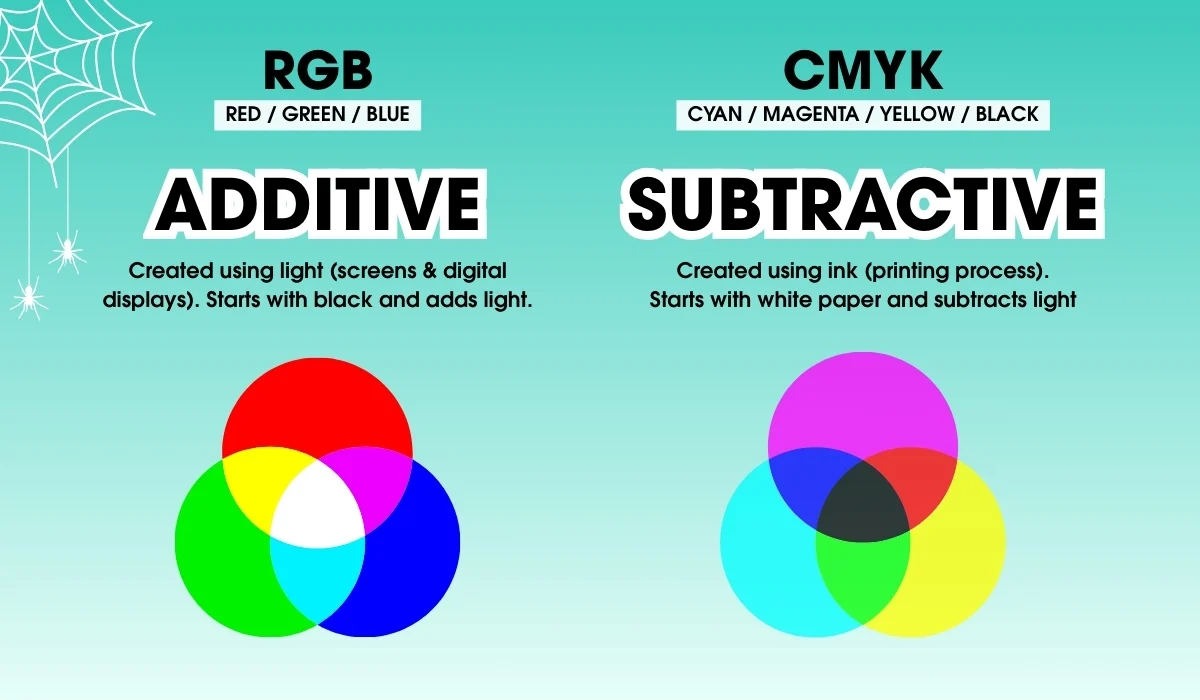
RGB stands for Red, Green and Blue.
These are the three colours of light used to create everything you see on digital screens. Your phone, laptop, tablet and television all use tiny points of light that blend red, green and blue together in different combinations to create millions of colours.
When all three lights shine at full strength, they create white. When there’s no light at all, you see black.
Because RGB is light-based, colours appear bright, vibrant and almost luminous on a screen. That’s why RGB is the colour mode used for anything designed to live in the digital world.
This includes things like:
• Websites
• Social media graphics
• Online adverts
• Digital presentations
• Email graphics
In short, if something is primarily viewed on a screen, it should be designed in RGB so the colours can shine as intended.
What is CMYK?
CMYK is essentially the other side of the coin.
It stands for Cyan, Magenta, Yellow and Key (Black).
Unlike RGB, CMYK creates colour using ink rather than light. When something is printed, tiny dots of these four colours are layered together in different amounts to produce the full range of colours you see on paper.
The more ink that’s added, the darker the colour becomes. Because CMYK relies on physical pigments instead of glowing light, colours often appear softer or slightly more muted than they do on screen. This is completely normal and simply part of how printing works.
CMYK is used for anything that will be physically printed, such as:
• Business cards
• Flyers and brochures
• Packaging
• Posters
• Magazines
• Stationery
Using CMYK for print helps ensure the colours translate as accurately as possible when ink meets paper.
Why Colours Look Different Between the Two
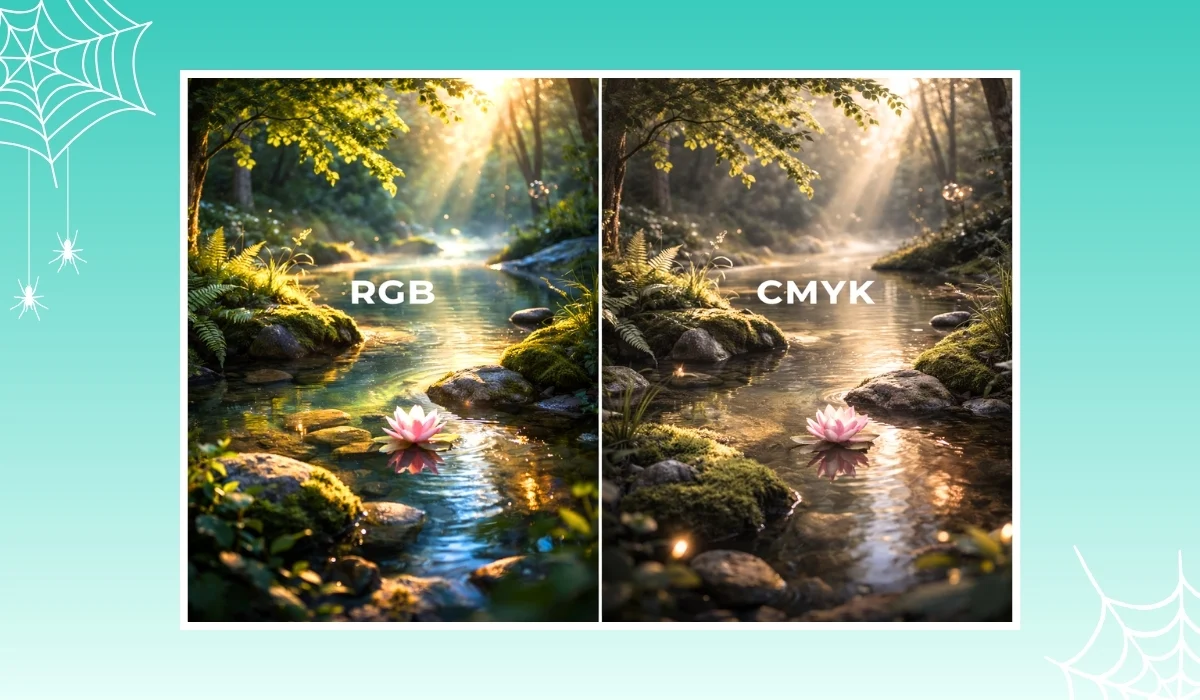
If you’ve ever printed something and wondered why the colour looks a little different than it did on your screen, this is exactly why.
RGB works with light, which can produce incredibly vivid colours that simply can’t be replicated perfectly with ink. Even with a little bit of design magic!
CMYK works within the limits of physical pigments, which naturally creates a softer appearance.
Think of it like stained glass glowing in sunlight versus paint on a canvas. Both are beautiful, but they create colour in completely different ways.
That’s why brand designers often adjust colours slightly when preparing artwork for print, to make sure the final result still feels aligned with the brand.
Why Designers Think About This From the Start
One common mistake I see people make is creating designs in RGB and sending them for print without conversion. This can lead to washed-out colours that don’t match the original vision. To avoid this, use CMYK from the start or convert RGB to CMYK before printing.
When I create branding for my clients, I’m always thinking about how those colours will travel and where they’ll appear. A palette that looks stunning on a website should still feel harmonious when it’s printed on packaging, stationery or signage.
This is why professional brand palettes include multiple colour codes, including both RGB and CMYK versions of your brand colours. Having these clearly defined ensures your colours remain consistent whether they’re glowing on a screen or printed on paper.
Bringing It All Together
RGB and CMYK are simply two different ways of creating colour, each designed for a different purpose.
RGB is for the digital world.
CMYK is for ink and print.
Understanding the difference helps ensure your designs translate beautifully across every platform your brand appears on.
Because colour isn’t just decoration. It’s part of the language your brand uses to communicate.
And when that language is used thoughtfully, a little bit of visual magic happens.

…
Thank you for reading.
Follow for more tips & tricks…👇✨
Instagram | The Canva Coven | YouTube | Newsletter
∞